


The salted roasted cashew products from Binh Phuoc are widely recognized for their delicious taste and substantial weight, stemming from years of investment in cashew cultivation since the time when it was still part of Song Be Province.
Binh Phuoc cashews are quite famous because this region has the largest cashew cultivation in the country. While other areas in Vietnam, such as Dong Nai, Binh Duong, Dak Lak, and Quang Ngai, also grow cashews, their cultivation areas are much smaller. If processed in the same place, cashews harvested from different regions tend to taste quite similar. Therefore, claiming that Binh Phuoc cashews are the best is not entirely accurate.
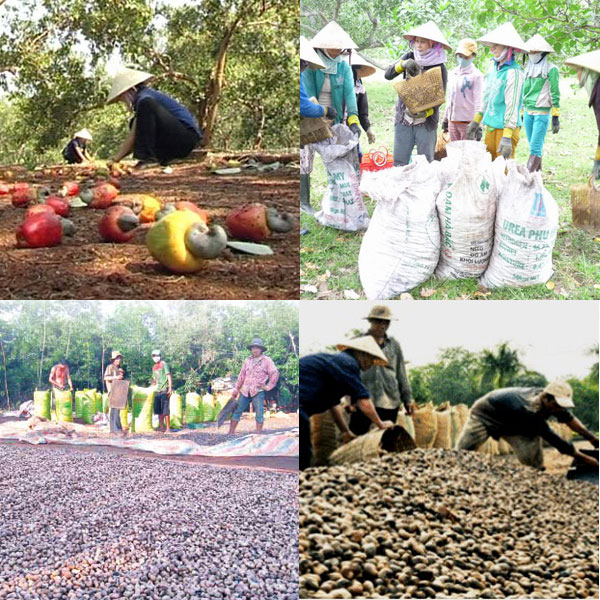
Cashews are harvested once a year during the Lunar New Year season, which lasts about three months at the beginning of the year. If you visit Binh Phuoc during this time, you will experience a lively atmosphere filled with laughter and the bustling sounds of transport vehicles.
In the highland regions with many hills and mountains, red basalt soil covers a large area, making it very suitable for cultivating agricultural products like cashews. Binh Phuoc, Dong Nai, Dak Lak, and other areas have abundant red soil, resulting in many cashew orchards in rural areas that yield plump and firm nuts.
Cashews are classified mainly by their size, while their nutritional content remains relatively similar. This classification affects market prices. For example, the W240 type has a maximum of 240 nuts per kilogram and a minimum of 220, while the W320 type has a maximum of 320 nuts and a minimum of 300. Generally, larger cashews mean fewer nuts per kilogram. Western consumers prefer larger nuts, which is why W240 to W450 salted roasted cashews from Binh Phuoc were often exported, with limited sales in the domestic market. As a result, we retain some of the exported cashews to sell to consumers in Ho Chi Minh City at lower prices than those for export.
Vietnamese cashew varieties are typically smaller, firmer, and have a slightly yellow color. Initially, only this variety was cultivated in Binh Phuoc. However, as consumer demands diversified and export requirements increased, other varieties from Africa and India were introduced, yielding larger, brighter white nuts with higher yields. Scientists and local farmers have also hybridized Vietnamese cashews to produce firmer nuts.
At this point, Binh Phuoc cashews have established a brand and position in the export market for processed cashew nuts, making Vietnam a significant production hub for cashews worldwide. The machinery used for sorting, shelling, and roasting is now controlled by Vietnamese experts in technology. Although some African countries have high cashew production, they lack the technology available in Vietnam, leading them to export raw nuts to our country.
Binh Phuoc salted roasted cashews are becoming increasingly well-positioned on the global map.

